

The ultraviolet lamp is a "prescription lamp"
2020-03-23
Lighting Weekly
Https://mp.weixin.qq.com/s/OCWKNGHjcGFus_CqNMCCBw
ultraviolet lamp
Ultraviolet lamp is "prescription lamp"
Recently, with the continuous development of the epidemic, everyone is very concerned about ultraviolet sterilization and detoxification. Many people have begun to use ultraviolet disinfection in units and homes. Suzhou Industrial Lighting Engineering Technology Research Center reminds you here:
UV lamp is a "prescription lamp", please use under the guidance of professionals!

Ultraviolet (UV Disinfection Light) is not a new technology, as early as the last century has been widely used, including in the field of medical and health for the inactivation of microorganisms.
UV lamps and lanterns with exotic goods on the market
Basic knowledge of UV
We should have a basic understanding of ultraviolet rays before using ultraviolet rays for disinfection and sterilization. Ultraviolet is an electromagnetic wave with a wavelength range of 400-100 nm, which is shorter than the wavelength of visible light. In our research and application, ultraviolet is usually divided into three bands: A, B and C.

ultraviolet spectrum
Ultraviolet is currently widely used in industrial curing, detection, medical and other fields, in which the deep ultraviolet is the UV-C band (290-100nm) ultraviolet has the ability to inactivate microorganisms. Our commonly used ultraviolet lamp is the direct use of deep ultraviolet light (center wavelength of 253.7nm) to irradiate the air or water, so as to kill the suspended virus or bacterial particles.
Principle of ultraviolet disinfection
Ultraviolet disinfection technology is based on the research foundation of modern epidemic prevention, medicine and photodynamics, and is realized by using specially designed UVC band ultraviolet lamps with high efficiency, high intensity and long life.
Ultraviolet radiation damage to microorganisms (bacteria, viruses, spores and other pathogens) and damage the function of nucleic acids, so that the microorganisms are killed and the purpose of disinfection and sterilization is achieved. The inactivation effect depends on the dose of ultraviolet radiation.
Novel Coronavirus COV-2019


In general, the radiation dose received by an object is influenced:
A. UV radiation intensity, which depends on the luminous intensity of the effective spectrum in the UV source, the light output angle (beam concentration) of the lamp, and the distance between the lamp and the irradiated object. Generally speaking, the higher the radiation intensity, the better the effect, the more the beam is concentrated on the surface of the irradiated object, and the closer the distance to the irradiated object, the better the effect;
B. cumulative radiation time, that is, the total radiation time of the illuminated object under the ultraviolet lamp, the longer the radiation time, the better the effect;
C. The environmental conditions of the virus, including the influence of ambient temperature, humidity and heat, generally speaking, high humidity will affect the disinfection effect, so the environment should be kept as dry as possible;
D. virus and in vitro attachments and their penetrability, ultraviolet rays have a good inactivation effect on the surface of directly irradiated objects, but the penetrability is not strong, and there is no obvious effect on the inside and covered parts of objects that cannot be penetrated by light.
Disinfection of ultraviolet "prescription"
In view of the professionalism of ultraviolet bioinactivation, it should generally be applied under the guidance of professionals, that is, according to the actual "condition" to prescribe the corresponding "prescription". Specifically, we should consider the following when using ultraviolet disinfection:
MICROBIAL STRUCTURE AND MECHANISM OF ULTRAVIOLET INACTIVATION
1. If the items are disinfected, the items that need to be disinfected should be spread out or hung in a closed space to expand the irradiation surface, and controlled within 1 meter from the light source, and irradiated with high-intensity ultraviolet rays for about 30 minutes at a time.
2. If it is space disinfection, the space area, height, room type index, building structure, space objects and the blocking of light should be considered. Generally, UVC light source with 253nm wavelength should be used, and the radiation intensity is above 90 μW/cm2 for about 60 minutes.
3. When disinfecting the space, the environment should be kept clean, and there should be no dust and water mist in the air. When the indoor temperature is low (below 20 degrees Celsius), the relative humidity is high (above 50%) or the air is not clean, the irradiation time should be appropriately extended.
For the choice of lamps and lanterns, we should consider different brands, different specifications of ultraviolet lamps, to confirm the light source radiation wavelength, radiation intensity, protective design, work requirements, etc., choose the appropriate light source and lamps.
After clarifying the disinfection requirements and ultraviolet lamps, the disinfection time, frequency, prevention and control measures should also be considered, and whether other disinfection methods, such as ozone or other chemical disinfection, should also be considered.

Protection during ultraviolet disinfection
Since ultraviolet rays have a destructive effect on organisms, it will also have an impact on our human body, just like the side effects of taking medicine. Therefore, when using ultraviolet rays for disinfection, necessary protective measures must be taken at the same time.
Of course, the radiation of ultraviolet rays to the human body is also dose-based. There are also abundant ultraviolet rays in the sunlight that irradiates us every day, because the ultraviolet dose in the sun is not high, and it is mainly concentrated in the near ultraviolet band, and generally does not require special protection. For professional disinfection of UV-C band ultraviolet rays, due to the high radiation energy, we must strengthen protection, it is strictly forbidden to directly irradiate the human body, let alone let the eyes look directly.
At present, many public areas prone to infection and crowd gathering are using ultraviolet lamps, especially in hospitals and various biological laboratories. When using ultraviolet lamps, we must strictly follow the operating procedures for installation, use and maintenance.
ultraviolet disinfection
For the use of UV lamps in the home environment, the following should be noted:
The effective radiation distance of ordinary ultraviolet lamp is not more than two meters. If the object is disinfected, the ultraviolet light should be close to the surface of the object; if the space is disinfected, the air should be kept flowing, or the lamp should be replaced to ensure that the radiation reaches all spaces.
2. Ultraviolet rays have a good disinfection effect in high temperature and dry conditions, so you should pay attention to keeping the room dry when using it, and avoid using it after spray disinfection or scrubbing the ground.
In the process of space disinfection, no one should enter the space; in the process of disinfection of items, should be placed in a closed space; to use remote switch control or remote control.
4. should always keep the surface of ultraviolet lamps and light sources clean, regularly wipe with 95% ethanol cotton ball. When conditions permit, the attenuation of ultraviolet radiation intensity should be checked regularly, and the light source should be replaced if necessary to ensure its disinfection effect.
Prescription, ultraviolet, disinfection, lamps, radiation, object, effect, use, space, we
RELATED INFORMATION
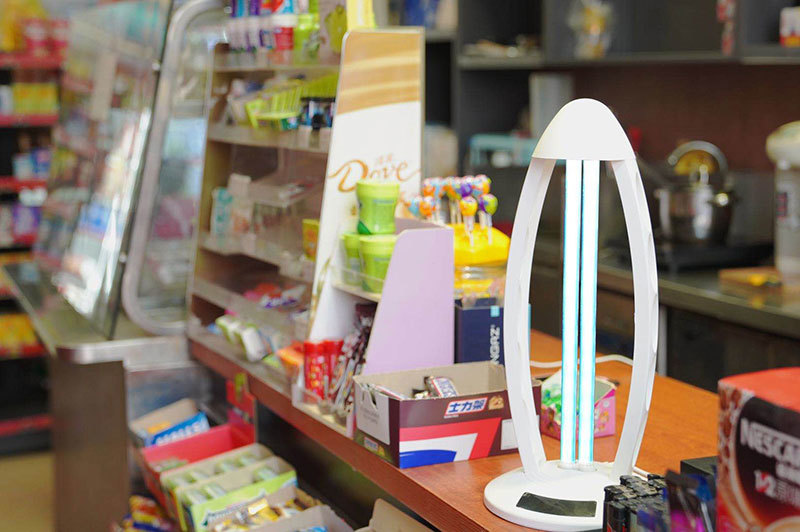
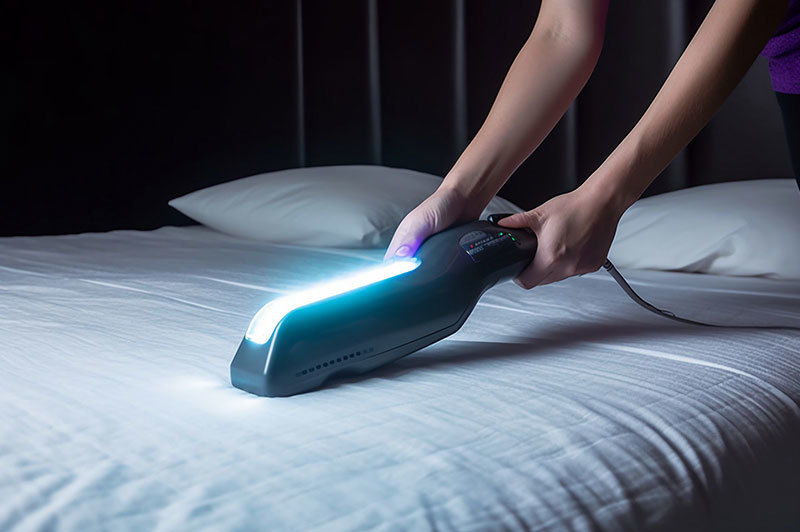
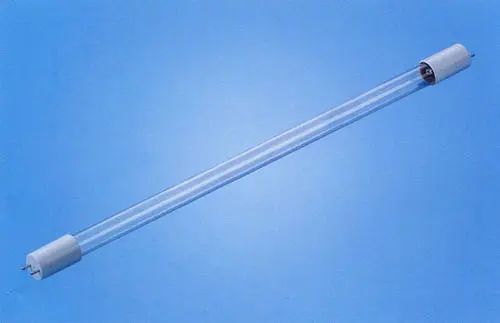

High-end private customized sterilization and disinfection electronic products, multi-purpose household and hotel sterilization and disinfection electronic products, portable sterilization and disinfection electronic products.
Contact Information
Address: 5th Floor, East of Datangyong, Qingke Management District, Zhang Street, Chancheng District, Foshan City
Website:www.gddayi.net
Telephone:+86 0757 82702723
Mobile:+86-18575787347
Fax: +86 0757 82702623