


Introduction of several sterilization methods in medical applications and their effects on electronic components
2020-03-14
Http://www.eepw.com.cn/article/201706/350123.htm
Thanks to advances in semiconductor and packaging processes, today's integrated circuits (ICs) are used in a wide variety of devices, including medical devices. A particular challenge in medical applications is the need to keep products sterile-free of harmful contaminants such as fungi, bacteria, viruses and spores. Although there is an extensive literature on sterilization methods and equipment, little is known about the effects of sterilization on electronic devices. This application note compares common sterilization methods and discusses their applicability to objects containing electronics.
physical method
There are a variety of physical sterilization methods, the most effective of which is a combination of heat, humidity and pressure in asteam sterilizerin the device.
High pressuresteam sterilizersterilization method
Heat sterilization of medical equipment has been applied as early as ancient Rome. The presence of steam significantly accelerates the heat penetration (steam sterilization). High pressure invented in 1879steam sterilizerFusion of heat, humidity and high pressure.
Working principle 1
An autoclave is a vessel similar to a pressure cooker. The object to be sterilized is placed therein and then sealed. Next, high-temperature steam is charged under high pressure to replace the air. Damp heat kills microorganisms by irreversible coagulation and denaturation of enzymes and structural proteins. The time and temperature required to achieve this depends on the pressure and the type of microorganisms to be killed. After the necessary time, the steam is released and the sterilized object is removed. The entire cycle lasts 15 to 60 minutes (batch processing).
Question
Autoclave sterilization is suitable for objects that can withstand moisture, high pressure (1 to 3.5 atm above ambient), and high temperature (121°C to 148°C). Typical examples are surgical instruments. Semiconductor devices can typically withstand temperatures of up to 125°C. However, the embedded battery at high temperature will greatly shorten the life. Memory devices using floating gate technology, such as EEPROMs, are sensitive to high temperatures. However, data integrity should not be compromised if data retention is specified for 10 years at 125°C. Otherwise, the memory data may be accidentally refreshed (overwritten), restoring the full charge on the floating gate. This applies to laser trimmed EEPROM. Since the type of tuning is often not given in the product data, it is necessary to contact the manufacturer for detailed information.
chemical method
There are many chemical methods that can be used for sterilization in the medical field. This section discusses several common methods. The chemical and physical methods may be applied in combination.
Ethylene Oxide (ETO) Sterilization
Ethylene oxide (ETO) was first reported in 1859 and has been important in industry since the early 20th century. The ETO sterilization method for preserving spices was patented in 1938. Since few alternatives are available for sterilizing medical devices that are sensitive to heat and moisture, the use of ETO continues to evolve.
Working Principle 2
An ETO sterilizer is a container that can hold an object to be sterilized. The basic ETO sterilization cycle consists of 5 steps (steam evacuation, gas injection, diffusion, evacuation, and air flushing) and takes approximately 2 1/2 hours, not including the ventilation time (exhaust ETO). Mechanical ventilation requires 8 to 12 hours at 50 to 60°C; passive ventilation is also possible, but it may take 7 days. After the ventilation is completed, the sterilized objects are removed (batch processing). ETO chemically reacts with amino acids, proteins and DNA to prevent microorganisms from reproducing.
Question
ETO sterilization is suitable for objects that cannot withstand the high temperatures and steam necessary for steam (autoclave) sterilization. Due to the temperature conditions of 30 ° to 60°C, ETO sterilization is very suitable for medical devices containing embedded electronics. However, embedded batteries may not accept vacuum. In addition, this method has a disadvantage: ETO is a highly flammable, petroleum-based gas and carcinogen.
Chlorine dioxide (CD) gas sterilization
Chlorine dioxide (CD) was discovered in 1811 or 1814 (both of which are listed) and was widely used as a bleaching agent in the paper industry. In 1988, the EPA registered it as a fungicide. This opens the door for applications in the medical field.
How it works 4,5
A CD sterilizer is a container that can hold an object to be sterilized. The basic CD sterilization cycle consists of 5 steps (moisture pretreatment, conditioning, generation and supply of chlorine dioxide gas, diffusion, and ventilation) and takes approximately 2 1/2 hours, including ventilation time (exhaustion of CD). After the ventilation is completed, the sterilized objects are removed (batch processing). Chlorine dioxide (ClO2) reacts as an oxidant with several cellular components, including the cell membranes of microorganisms. CD kills by "stealing" electrons from the object (oxidation), breaking its molecular bonds, causing the organic cells to rupture. As CD alters proteins in the microbial structure, enzyme function is disrupted, leading to rapid bacterial death. The power of CD is due to the simultaneous oxidative attack on many proteins, thus preventing the cell from mutating into a resistant type. In addition, due to the low activity of chlorine dioxide, its bactericidal action can be maintained for a long time in the presence of organic matter.
Question
CD sterilization is suitable for objects that cannot withstand the high temperatures and steam necessary for steam (autoclave) sterilization. Due to the temperature conditions of 15 ° to 40°C, CD sterilization is very suitable for medical devices containing embedded electronics. CD gas is non-flammable and non-carcinogenic in the concentration used in this method. It does not need a high concentration to achieve the effect of killing spores.
hydrogen peroxide sterilization
Hydrogen peroxide was first isolated in 1818. It has a long history of use in the pharmaceutical industry and is a common substitute for ethylene oxide (ETO). There are two ways to use hydrogen peroxide: a) vaporized hydrogen peroxide sterilization and B) hydrogen peroxide ion sterilization.
Vaporized hydrogen peroxide (VHP) sterilization
How it works 6,7
The object to be sterilized is first placed in a VHP sterilizer. The basic VHP sterilization cycle consists of 3 steps (including vacuum-generated conditioning, H2O2 injection, and ventilation) and takes approximately 1 1/2 hours, including ventilation time (exhaust of H2O2). After the ventilation is completed, the sterilized objects are removed (batch processing). The precise mechanism of action of HPV is yet to be fully understood and may vary depending on the microorganism. By generating reactive oxygen species, such as hydroxyl groups, H2O2 generates oxidative stress that attacks multiple targets, including nucleic acids, enzymes, cell wall proteins, and lipids.
Question
VHP sterilization is suitable for objects that cannot withstand the high temperature environment and steam treatment of steam (autoclave) sterilization. Due to the temperature conditions of 25 ° to 50°C, VHP sterilization is very suitable for medical devices containing embedded electronics. However, embedded batteries may not accept vacuum. VHP is less permeable than ETO, and the US FDA has not approved this method for sterilization of medical devices in health care settings.
hydrogen peroxide ion sterilization
Working principle 1
This method is a combination of chemical and physical methods. The object to be sterilized is first placed in a hydrogen peroxide ion sterilizer. The basic hydrogen peroxide ion sterilization cycle consists of 4 steps (vacuum generation, H2O2 injection, diffusion and ion discharge) and takes about 1 to 3 hours. No ventilation required. After the cycle is completed, the sterilized objects are removed (batch processing). Hydrogen peroxide ion sterilization mainly uses the combined action of hydrogen peroxide gas and the generation of free radicals (hydroxyl and peroxygen radicals) in the ion phase of the cycle to kill microorganisms.
Question
Hydrogen peroxide ion sterilization is suitable for objects that cannot withstand the high temperature environment and steam treatment of steam (autoclave) sterilization. The vacuum required is not as deep as VHP sterilization. Although the process temperature of 40°C to 65°C is suitable, the 13.56MHz RF energy in the ion discharge phase reaches the 200W to 400W range, which will affect the embedded electronics. Hydrogen peroxide ion sterilization should not be used for objects containing semiconductors.
radiation method
gamma ray sterilization 8
Gamma radiation was discovered in 1900 while studying the radiation of radium. Other sources were subsequently discovered, such as technetium 99m and cobalt 60. The industrial application of gamma radiation began in the 1950 s, and the radiation source was cobalt 60. Cobalt 60 does not occur naturally and is produced artificially in the reactor.
Method, sterilization, steam, object, sterilizer, eto,cd, high pressure, ventilation, incl.
RELATED INFORMATION
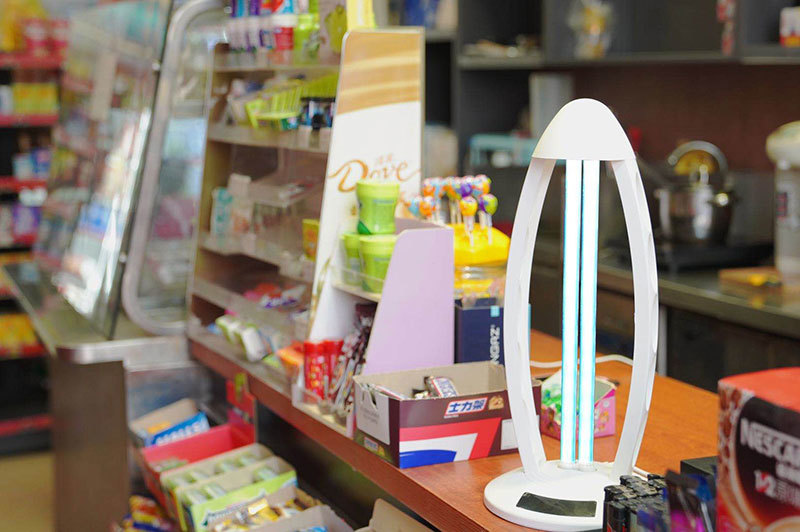
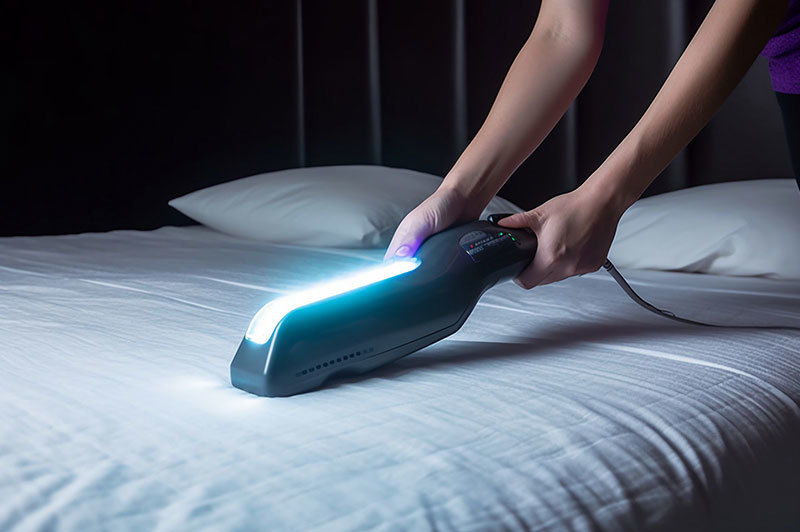

High-end private customized sterilization and disinfection electronic products, multi-purpose household and hotel sterilization and disinfection electronic products, portable sterilization and disinfection electronic products.
Contact Information
Address: 5th Floor, East of Datangyong, Qingke Management District, Zhang Street, Chancheng District, Foshan City
Website:www.gddayi.net
Telephone:+86 0757 82702723
Mobile:+86-18575787347
Fax: +86 0757 82702623